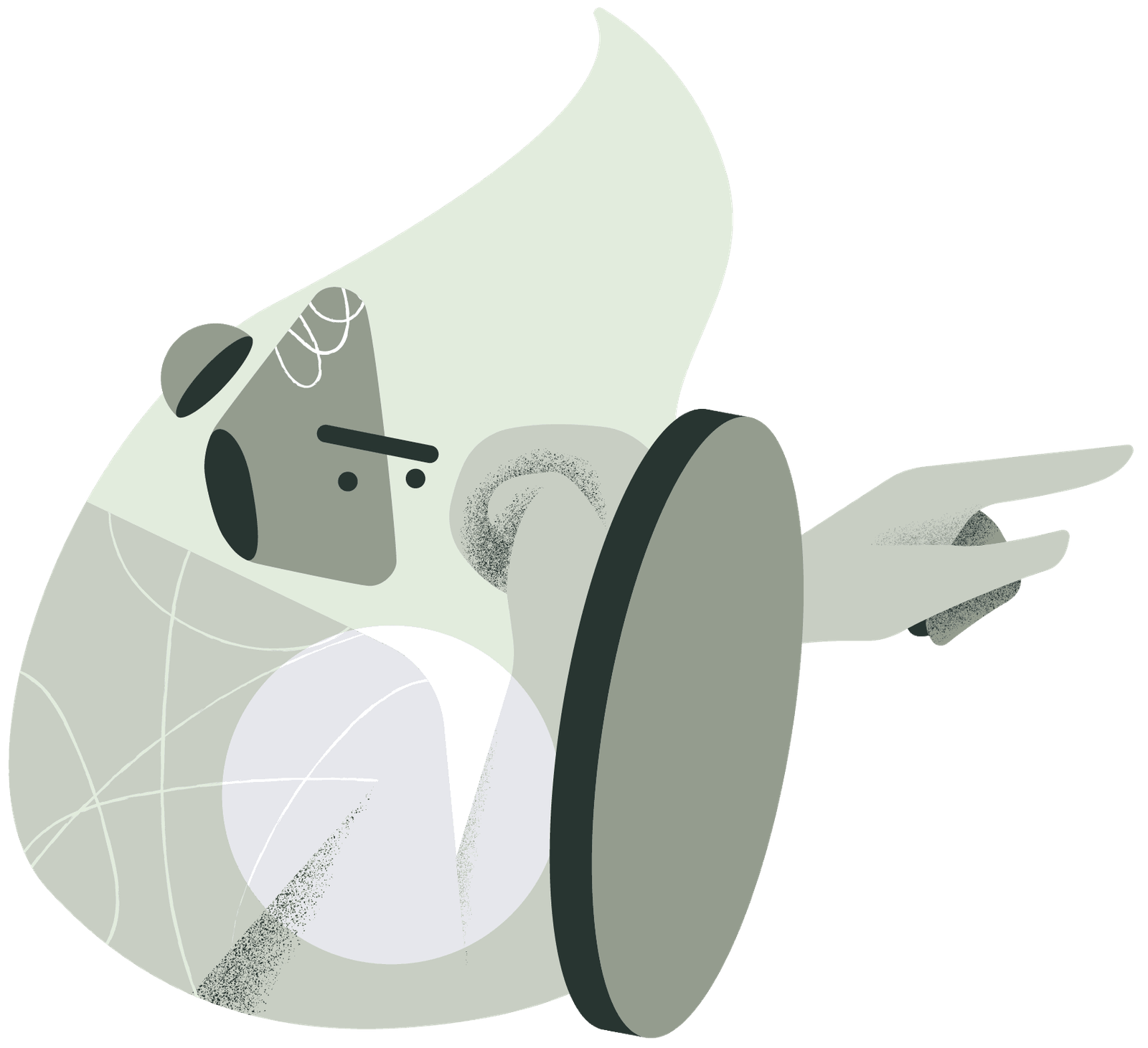
At a glance
Eights move through the world with a lot of energy and a low tolerance for being told what to do. They notice power dynamics quickly, in a room or a relationship, and they'd rather be the one setting the terms than the one waiting to find out what someone else decides.
Eights are good at taking action when other people hesitate. Where it gets harder for them is admitting they're tired, scared, or wrong, especially where someone might see it.
**
Eights are confident, straightforward people who get things done. They don't wait for permission, and they don't spend much time worrying about whether taking charge will make them liked.
That same directness can be hard for other people to be around. An Eight's all-or-nothing approach can land as more forceful than they intend, and it's genuinely difficult for an Eight to say "I was wrong" or defer to someone they don't fully respect.
Eights want to feel strong enough that no one can control them or catch them off guard. They want to protect the people and things that matter to them, and they want to be able to trust their own judgment more than anyone else's.
In Enneagram terms, Eights belong to the Body group, along with Nines and Ones, the three types with a particular relationship to anger. Nines have largely stopped noticing their anger. Ones hold theirs in and direct it at themselves. Eights do neither: they let their anger out and use it to stay in control and keep anyone from getting the upper hand.
Many Eights grew up learning that the only person they could really count on was themselves, and that showing weakness meant getting hurt, by people or by circumstances. That belief hardens into a working assumption that life rewards strength and punishes softness. So Eights put the part of themselves that feels frightened or small somewhere it can't be reached, and lead with the part that can't be pushed around.
Eights tend to assume the world runs on strength: that whoever's toughest wins, and whoever shows a weak spot loses it. That assumption is exhausting to maintain and hard to set down, since setting it down feels like the exact risk they've spent a lifetime avoiding.
The real struggle for an Eight is knowing when to stop pushing. Their drive to stay in control and come out ahead can tip into overreach: more conflict than the situation needed, more force than the moment called for. Even small signs of being managed or overruled can be hard for an Eight to let go of.
An Eight's guard doesn't remove the parts of them that feel afraid or hurt, it just buries them. That can come across as coldness, even when the Eight would say they're fine. Often the harder edge is aimed at themselves too, for the fact that they can be hurt like anyone else.
When an Eight is doing well, they stop treating vulnerability as a liability. They find they can set their guard down sometimes without the world taking advantage of it. At their best, Eights become people who use their strength on other people's behalf: leaders who protect instead of override, and who can be wrong without it costing them their sense of self.
The most useful thing an Eight can hear: real strength includes being willing to let someone see you're not invincible. Protecting people matters. Letting people close enough to protect you sometimes matters just as much.
Eights bring momentum to a team. They make decisions when a project has stalled out on deliberation, and they'll say the thing everyone else is avoiding saying in a meeting. Colleagues often rely on an Eight to push something across the finish line.
The friction point is usually pace and tone. An Eight's directness can land as pressure, and their comfort with conflict can outstrip what the room actually wants. Eights tend to do well in roles with real ownership and stakes: leading a team, running point on a negotiation, turning around something that's failing. They can struggle in highly structured environments where someone else sets the terms and there's little room to act on their own judgment.
What helps an Eight thrive at work: real authority that matches their responsibility, and colleagues who'll push back directly instead of going quiet. An Eight generally respects someone more for disagreeing openly than for staying out of the way.
Under stress, Eights can take on some of the less healthy traits of Type 5: pulling back from people, going quiet and guarded, replacing direct action with withdrawal and suspicion of other people's motives.
In growth, Eights move toward the healthier traits of Type 2: more openness about what they need, more willingness to let their care for people show instead of staying behind a wall of self-sufficiency.
Every type can lean toward one of its two neighbors. For Eights, that's Type 7 or Type 9.
more outgoing and energetic. This wing adds sociability and a taste for enjoying life. These Eights often put their drive toward causes or projects they're genuinely excited about, not just ones they feel obligated to win.
more measured and even-keeled. This wing softens the edge of confrontation, adding patience and a willingness to negotiate. These Eights often lead through looking out for people, with a gentler edge than an Eight without this wing, though it can take them longer to act.
Wings
Explore Type 8 wings
Personality isn't fixed. People move between healthier and less healthy expressions of their type depending on the season of life, the stress they're under, and how much self-awareness they're bringing to it. Here's how that range shows up for Eights. These are patterns, not a diagnosis.
Unhealthy Eights** push back hard, verbally if not physically, against anything that feels like a threat to their control. When pushing back stops working, they pull away and start shutting people out before those people can shut them out first. What used to be a fighting spirit curdles into cynicism, and any perceived slight to their authority or self-respect can trigger a shutdown or a blowup, both attempts to protect the same frightened part of themselves they've spent years keeping hidden.
Average Eights** build their sense of self around being strong and hard to push around. They're comfortable with confrontation, especially since they tend to come out ahead in it, and they respect people who'll meet them directly more than people who back down. That same drive to stay in control makes them genuinely protective of people they see as being taken advantage of, even as they can get carried away in their own certainty that they're right.
healthy expressions of their type depending on the season of life, the stress they're under, and how much self-awareness they're bringing to it. Here's how that range shows up for Eights. These are patterns, not a diagnosis.
Healthy Eights stop needing to win every interaction to feel safe. They become people who use their strength for others, not just themselves: protectors and leaders who can admit fault, welcome disagreement, and let people close without feeling exposed. Healthy Eights still have real presence. Being around them feels safe, like their strength is being used to look out for people instead of over them.
It's common not to be sure of your type right away. The Enneagram looks at the motivation behind a behavior, not just the behavior, so different types can look similar from the outside.
Type 8s are most often confused with Type 1 and Type 2. Some also mistype as a Type 3 or Type 6. Since every type has two possible wings, it's also worth checking whether your "wing" might actually be your core type.
Read the full guide to Type 8 mistypes
Mistypes
Type 8 lookalikes
Type 8 patterns show up in love, friendship, and work. The compatibility guide covers how this type pairs with all nine types, including another Type 8.
Relationships
Type 8 with each type
Martin Luther King Jr.
Indira Gandhi
Aretha Franklin
Mikhail Gorbachev
Notice the size of your presence. Your energy in a room is usually bigger than you think it is. What feels like plain directness to you can land as pressure to someone else. That doesn't make them weak, it makes them a different type. If someone tells you they felt steamrolled, take it as information, not an insult.
Practice naming a softer feeling before it turns into anger. When you feel your temper rising, pause and ask what's underneath it. Anger is often the fastest feeling to reach for when something closer to hurt, fear, or disappointment is actually what's there.
Let someone else be right without it costing you anything. Pick a low-stakes disagreement and let it go, even if you think you have the better argument. Notice that the world doesn't end.
Ask before you assume you need to take over. Before stepping in and taking charge, check whether the situation actually needs you to, or whether it needs you to trust someone else to handle it.
Let someone see you when you're not at full strength. Choose one person you trust and let them see you tired, unsure, or asking for help. It won't cost you the respect you're afraid of losing.
---
Notice the size of your presence.
Your energy in a room is usually bigger than you think it is. What feels like plain directness to you can land as pressure to someone else. That doesn't make them weak, it makes them a different type. If someone tells you they felt steamrolled, take it as information, not an insult.
Practice naming a softer feeling before it turns into anger.
When you feel your temper rising, pause and ask what's underneath it. Anger is often the fastest feeling to reach for when something closer to hurt, fear, or disappointment is actually what's there.
Let someone else be right without it costing you anything.
Pick a low-stakes disagreement and let it go, even if you think you have the better argument. Notice that the world doesn't end.
Ask before you assume you need to take over.
Before stepping in and taking charge, check whether the situation actually needs you to, or whether it needs you to trust someone else to handle it.
Let someone see you when you're not at full strength.
Choose one person you trust and let them see you tired, unsure, or asking for help. It won't cost you the respect you're afraid of losing.
Nine types
Type 1
Ones are idealistic and conscientious, with a strong sense of right and wrong and a real commitment to doing things well. They act with discipline and can put off a short-term reward for a better outcome later. Ones are

Type 2
Twos are generous and warm, with a genuine drive to make the people around them feel loved and comfortable. They notice what someone needs, sometimes before that person does, and they're quick to offer it: their time, th
Type 3
Threes are driven, adaptable, and hardworking. They believe in their own ability to grow their talents and get things done, and they're quick to read a room and become whoever that room needs them to be to win its approv

Type 4
Fours are introspective and expressive, with an unusually direct line to their own emotions. They're comfortable in parts of human experience most people avoid: grief, longing, the strange, the dark. They care about mean
Type 5
Fives want to understand the world before they engage with it. They observe, analyze, and take things apart to see how they work, and they'd rather know everything there is to know about a situation before they act on it
Type 6
Sixes are reliable, loyal, and careful. They notice what could go wrong before anyone else does, and they put real effort into being ready for it. People count on a Six to follow through, to ask the question no one else

Type 7
Sevens are energetic and quick to see the possibilities in a situation. For a Seven, the world is mostly a place worth exploring, and they live with an eye on what's next. They're often the person in the room who can fin
Type 8 · here
Eights move through the world with a lot of energy and a low tolerance for being told what to do. They notice power dynamics quickly, in a room or a relationship, and they'd rather be the one setting the terms than the o

Type 9
Nines are easygoing, grounded, and unselfish. They want peace, in their own inner state and in the environment around them, which is why they're often the ones a group turns to for mediating. Nines are genuinely good at
Think Type 8 might be you?
Take the free test and see how The Challenger shows up for you.
