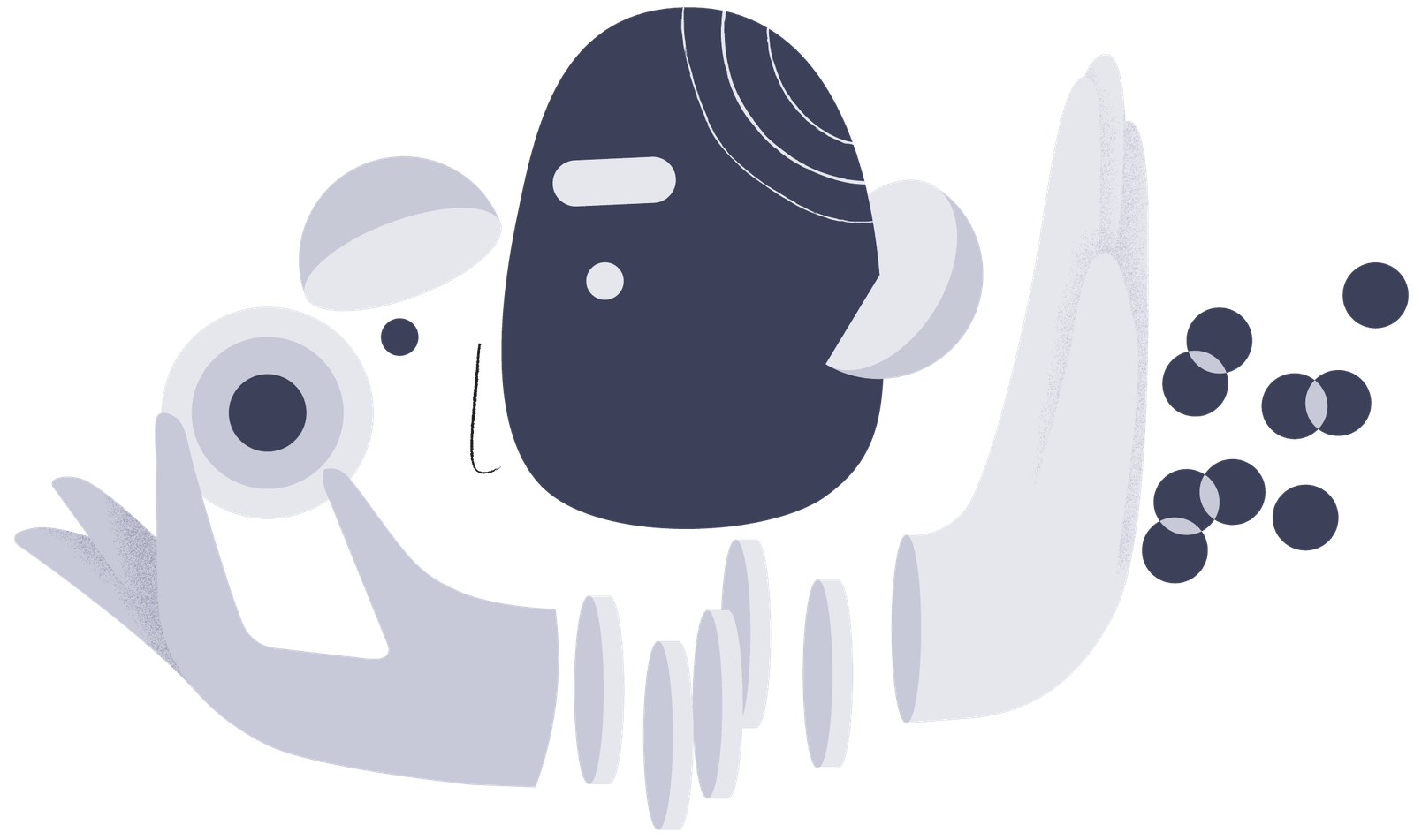
At a glance
Sixes are reliable, loyal, and careful. They notice what could go wrong before anyone else does, and they put real effort into being ready for it. People count on a Six to follow through, to ask the question no one else thought to ask, and to stay when things get hard.
Sixes are good at building trust and holding a group together. Where it gets harder for them is trusting themselves the same way they trust the people and structures around them.
**
Sixes are often called Loyalists, and it fits: they're some of the most dependable, steadfast people you'll meet, with a sharp sense of humor that can surprise people who only know them as cautious. They notice what everyone else missed, plan for problems before they happen, and show up for the people and causes they've committed to.
Sixes work hard at becoming genuinely capable, and they usually succeed. Despite how much they worry about what could go wrong, they tend to be composed and effective once something actually does. The harder part, for many Sixes, is trusting other people, and their own judgment, before a crisis forces the question.
What Sixes want most is security: for the ground under them to feel solid, and to know who and what they can rely on. The clearer the guidance, the less they have to carry the weight of figuring out what's safe on their own.
Sixes belong to what's sometimes called the head group, along with Type 5 and Type 7 . All three types have a particular relationship to fear and to their own minds. Fives use their mind like a shelter, somewhere to retreat when the world feels like too much. Sevens use their mind to keep moving toward the next thing, staying ahead of anything that might disappoint them. Sixes use their mind differently: to scan continuously for what could go wrong, so they're never caught without an answer.
As children, many Sixes absorb the sense that the world isn't fully safe, and that the adults meant to protect them can't always be relied on for that. They become attentive to small signs of danger and try to stay ahead of it by anticipating as much as they can. That pattern often continues into adulthood: looking for people and structures that can offer the security that wasn't reliably there early on, while staying wary of trusting them completely, since trust has been let down before.
Sixes tend to operate as though the world is unpredictable unless they've prepared for what's coming, which makes it hard to ever feel like there's quite enough preparation. Some Sixes respond by leaning into caution: staying close to what's familiar, deferring to people they see as capable. Others respond by confronting what scares them directly, testing it, sometimes provoking it, so it doesn't get the chance to catch them off guard. Most Sixes move between both, depending on the day and what's at stake.
This is also where the tension with authority shows up. A Six wants someone reliable to trust, but trusting fully means being exposed if that person or structure lets them down. So many Sixes settle into a kind of holding pattern: relying on an authority while quietly testing whether it actually deserves that reliance.
Worry, for a Six, isn't random. It's the mind doing the job it's learned to do: running the scenarios so nothing arrives unannounced. The problem is that the mind rarely knows when to stop running them.
When a Six is doing well, they stop needing the worry to feel prepared. They find real confidence in their own judgment, not because the world got any safer, but because they trust themselves to handle what it brings. At their best, Sixes become people others turn to for steadiness: warm, funny, genuinely reliable, and brave exactly when it counts.
That shows up most clearly in an actual crisis. A Six who has spent years bracing for disaster often turns out to be the calmest, most capable person in the room once it actually happens. The resourcefulness was there all along, underneath the worry.
Sixes are the people who ask the question everyone else was quietly wondering, and who catch the risk in a plan before it becomes a problem. Teams lean on a Six for follow-through, for troubleshooting, and for genuinely caring whether the group succeeds, not just their own part in it.
The friction point is usually decision speed and trust. A Six's instinct to think through what could go wrong is valuable, but it can also slow a team down or read as pessimism when the group needs to move. Sixes tend to do well in roles that reward vigilance and preparation: quality assurance, risk management, operations, safety, project coordination. They can struggle in roles that demand fast decisions on incomplete information, or where leadership is inconsistent, since unclear or unreliable authority is one of the hardest environments for a Six to feel steady in.
What helps a Six thrive at work: a manager who follows through on what they say, and real decision-making authority that lets a Six act on their own judgment instead of only flagging problems for someone else to resolve.
Under stress, Sixes can take on some of the less healthy traits of Type 3: more focused on appearing competent than actually feeling secure, competitive in a way that isn't usually like them, cutting corners to look capable rather than doing the slower work of actually becoming it.
In growth, Sixes move toward the healthier traits of Type 9: calmer, less reactive to worst-case scenarios, more able to trust that things will hold together without needing to control every variable.
Every type can lean toward one of its two neighbors. For Sixes, that's Type 5 or Type 7.
more private and self-sufficient. This wing adds a cooler, more analytical edge, making it easier for a Six to work independently and rely less on outside reassurance. It also tends to run more introverted, and more comfortable inside predictable, rule-based environments.
more outgoing, and quicker to look for the lighter side of a situation. This wing adds energy and playfulness, making it easier for a Six to take a risk or enjoy the unexpected instead of guarding against it.
Wings
Explore Type 6 wings
Personality isn't fixed. People move between healthier and less healthy expressions of their type depending on the season of life, the stress they're under, and how much self-awareness they're bringing to it. Here's how that range shows up for Sixes. These are patterns, not a diagnosis.
Unhealthy Sixes** find the underlying fear harder to manage. It starts to show up as suspicion, defensiveness, or a readiness to see threats that aren't really there. Some pull inward and avoid anything unfamiliar. Others provoke conflict or test people's loyalty before those people get the chance to disappoint them first. Neither response resolves the fear underneath it. What actually needs attention is a Six's trust in their own judgment, a harder thing to build than any amount of vigilance about the world outside. It's a cycle that's hard to break from the inside.
Average Sixes** are steady, dependable, and often the glue in a group or relationship, but security still has to come from somewhere outside themselves: a partner, a job, a belief system, a clear set of rules. They commit fully once they've found something stable enough to trust, and they bring real loyalty and a self-deprecating sense of humor to the people around them. The tradeoff is a near-constant undercurrent of worry about what could go wrong, even when things are going fine.
healthy expressions of their type depending on the season of life, the stress they're under, and how much self-awareness they're bringing to it. Here's how that range shows up for Sixes. These are patterns, not a diagnosis.
Healthy Sixes have found real confidence in their own judgment. They no longer need constant reassurance to feel steady, and they've stopped treating every authority figure as someone to either lean on completely or resist on principle. Healthy Sixes are warm, often funny, and genuinely courageous when it counts: the people who quietly hold a group together and show up fully when something actually goes wrong.
It's common not to be sure of your type right away. The Enneagram looks at the motivation behind a behavior, not just the behavior, so different types can look similar from the outside.
Type 6s are most often confused with Type 2 and Type 9. Some also mistype as a Type 4 or Type 8. Since every type has two possible wings, it's also worth checking whether your wing might actually be your core type.
Read the full guide to Type 6 mistypes
Mistypes
Type 6 lookalikes
Type 6 patterns show up in love, friendship, and work. The compatibility guide covers how this type pairs with all nine types, including another Type 6.
Relationships
Type 6 with each type
Ellen DeGeneres
Tom Hanks
Princess Diana
Frodo Baggins
Julia Roberts
Woody Allen
Malcolm X
Janet Reno
Notice the worry without obeying it. When your mind jumps to the worst-case scenario, don't fight it or try to force it quiet. Acknowledge what it's trying to do, then ask whether it's actually protecting you right now or just running out of habit.
Track how often the worst case actually happens. Keep a record for a few weeks of the outcomes you were bracing for, next to what actually happened. Most Sixes find the gap is bigger than it feels in the moment.
Practice trusting your own read on a situation. Before asking three people what they think, try sitting with your own answer first. You have more judgment to work with than the anxiety lets you believe.
Notice your pattern with authority. Are you more likely to defer without question, or to push back on principle? Neither is wrong, but naming which one you default to makes it easier to choose deliberately instead of running on autopilot.
Build in real stillness. A few minutes of quiet, unstructured time, away from news and notifications, gives an active mind room to settle instead of staying in scan mode all day.
Notice the worry without obeying it.
When your mind jumps to the worst-case scenario, don't fight it or try to force it quiet. Acknowledge what it's trying to do, then ask whether it's actually protecting you right now or just running out of habit.
Track how often the worst case actually happens.
Keep a record for a few weeks of the outcomes you were bracing for, next to what actually happened. Most Sixes find the gap is bigger than it feels in the moment.
Practice trusting your own read on a situation.
Before asking three people what they think, try sitting with your own answer first. You have more judgment to work with than the anxiety lets you believe.
Notice your pattern with authority.
Are you more likely to defer without question, or to push back on principle? Neither is wrong, but naming which one you default to makes it easier to choose deliberately instead of running on autopilot.
Build in real stillness.
A few minutes of quiet, unstructured time, away from news and notifications, gives an active mind room to settle instead of staying in scan mode all day.
Nine types
Type 1
Ones are idealistic and conscientious, with a strong sense of right and wrong and a real commitment to doing things well. They act with discipline and can put off a short-term reward for a better outcome later. Ones are
Type 2
Twos are generous and warm, with a genuine drive to make the people around them feel loved and comfortable. They notice what someone needs, sometimes before that person does, and they're quick to offer it: their time, th
Type 3
Threes are driven, adaptable, and hardworking. They believe in their own ability to grow their talents and get things done, and they're quick to read a room and become whoever that room needs them to be to win its approv
Type 4
Fours are introspective and expressive, with an unusually direct line to their own emotions. They're comfortable in parts of human experience most people avoid: grief, longing, the strange, the dark. They care about mean
Type 5
Fives want to understand the world before they engage with it. They observe, analyze, and take things apart to see how they work, and they'd rather know everything there is to know about a situation before they act on it
Type 6 · here
Sixes are reliable, loyal, and careful. They notice what could go wrong before anyone else does, and they put real effort into being ready for it. People count on a Six to follow through, to ask the question no one else
Type 7
Sevens are energetic and quick to see the possibilities in a situation. For a Seven, the world is mostly a place worth exploring, and they live with an eye on what's next. They're often the person in the room who can fin
Type 8
Eights move through the world with a lot of energy and a low tolerance for being told what to do. They notice power dynamics quickly, in a room or a relationship, and they'd rather be the one setting the terms than the o

Type 9
Nines are easygoing, grounded, and unselfish. They want peace, in their own inner state and in the environment around them, which is why they're often the ones a group turns to for mediating. Nines are genuinely good at
Think Type 6 might be you?
Take the free test and see how The Loyalist shows up for you.
