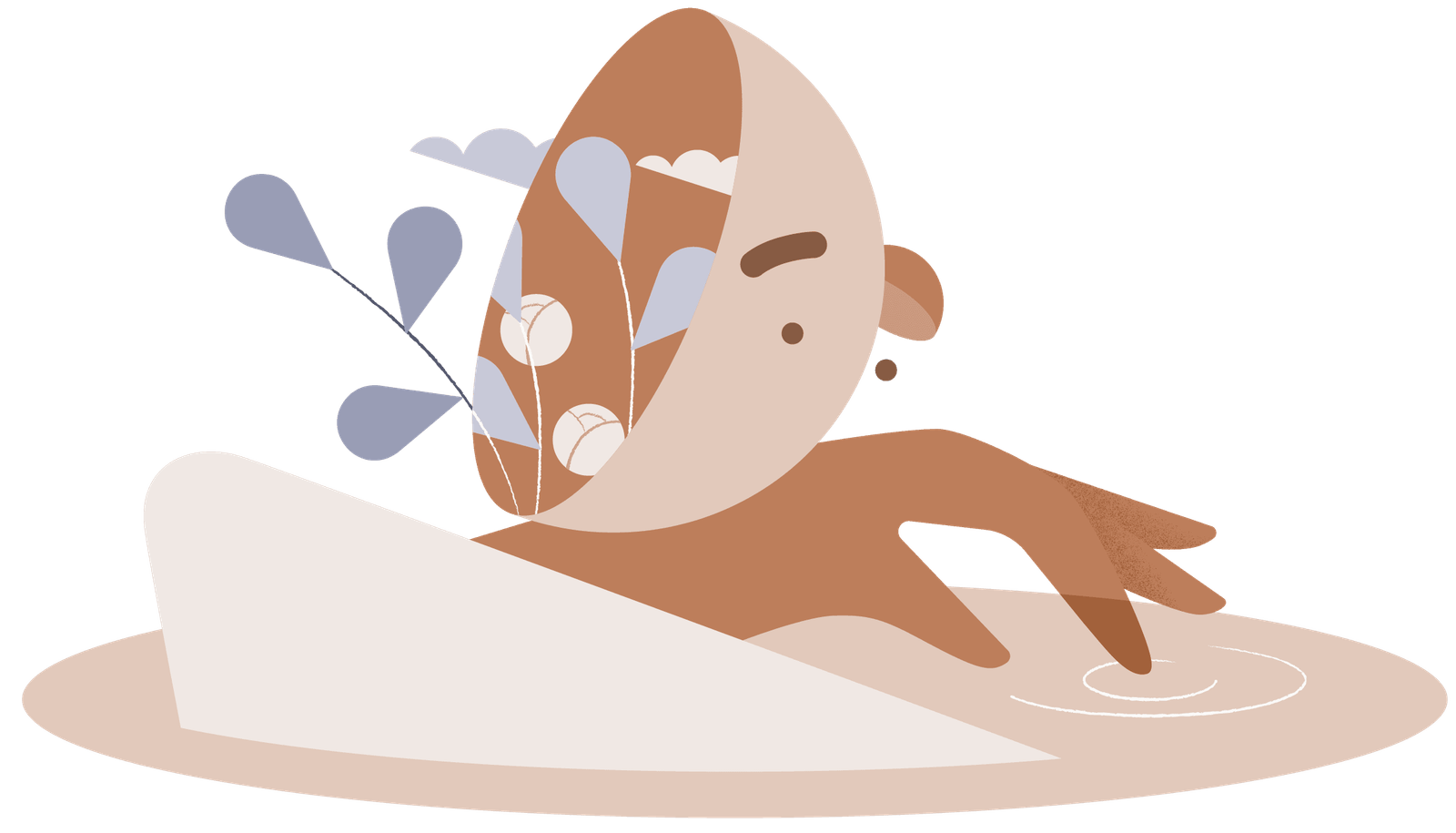
At a glance
Fours are introspective and expressive, with an unusually direct line to their own emotions. They're comfortable in parts of human experience most people avoid: grief, longing, the strange, the dark. They care about meaning and depth, and they want the people around them to notice the beauty they see.
That same attunement to their inner world can work against them. Fours can get pulled under by their own feelings and lose their footing with everyone else, which can look like moodiness, withdrawal, or drama from the outside.
**
Fours experience their individuality as more than a personality trait. It's the fact their sense of self gets built around. They see and feel the world differently from the people close to them, and that difference can leave them feeling like no one fully gets it, no matter how close the relationship actually is. They put real effort into finding and expressing what's genuinely theirs, using their emotional range to communicate the parts of themselves that are harder to put into words.
Fours notice beauty, complexity, and meaning that other people miss. That same depth lets them sit with the darker parts of life without needing to smooth them over, which is part of what makes them good company in hard moments. But the intensity that makes a Four's inner life so rich can also pull their attention inward for too long. While they're searching for the right way to express what they feel, a Four can lose track of the people and needs around them. Their love of the unusual can tip into the eccentric, and an identity built on feelings can become as unstable as the feelings themselves.
Fours want to hold on to their own take on the world, distinct from everyone else's. They want their self-image as someone genuinely different to stay intact, and they want room to express the moods and feelings that make up their inner life.
Fours belong to the Enneagram's Heart group, along with Twos and Threes , the three types with a particular relationship to shame and self-worth. Twos look for love and acceptance by setting themselves aside for other people. Threes worry they aren't worth loving unless they're outperforming everyone around them. Fours look for their worth in what makes them different, while quietly doubting that worth, since they feel like something in them is missing that everyone else has.
What is common for Fours is that somewhere in their childhood the message got reinforced in them that there was something off about them. The undertone was: "No one understands why you think and feel the way you do, and no one ever will." What this creates is a Four's long search for whatever it is they're supposedly missing that would make them like everyone else. They spend a lot of time exploring their inner world looking for it, and part of them keeps hoping someone will eventually come along who understands how they feel, who really gets them, and show them the way to who they are.
Fours tend to see the world through the lens of beauty and loss. Underneath, many carry a persistent sense that they're missing something essential that everyone else has. That feeling of being different shapes their identity and keeps their attention on themselves and on what it would mean to be fully, distinctly themselves. Part of them keeps hoping that if they search long enough, they'll find what they're looking for, or that someone else will arrive and show them the way.
That search is where envy comes in, and it's a Four's central struggle. When it feels like everyone else has some special quality you lack, it's easy to believe that having someone else's looks, status, or character would finally make you whole.
Fours who are healthy live from a real sense of connection to the people around them. Their attention shifts outward instead of staying locked on their own emotions. They find the discipline to take what lives in their imagination and turn it into something real, putting their ideas into action instead of just feeling them.
The most useful thing a Four can hear: being different doesn't mean being less than, or missing something everyone else has. Fours don't need to keep searching to earn a place in the world. They're already allowed to step into it and make it more beautiful, for themselves included.
Fours bring real creative and emotional range to a team. They notice what's missing, a flat pitch, a project that technically works but has no soul, and they're often the person who pushes a good idea toward something distinctive instead of generic.
The friction point is usually consistency and feedback. A Four's output can shift with their mood, which can be hard on a team that needs predictable output, and critique meant for the work can land as a comment on who they are. Fours tend to do well in roles with real room for expression and meaning: design, writing, the arts, or therapy-adjacent work, where craft and originality actually matter. They can struggle in highly standardized, repetitive environments with no room to make something their own.
What helps a Four thrive at work: work that has some real creative or emotional stake in it, and a manager who separates feedback on the work from feedback on the person who made it.
Under stress, Fours can take on some of the less healthy traits of Type 2: becoming more focused on being needed by others, doing things for people as a way to earn connection, then feeling resentful when that effort goes unnoticed.
In growth, Fours move toward the healthier traits of Type 1: more discipline about turning ideas into action, more consistent follow-through, and a self-image that depends less on how they happen to feel on a given day.
Every type can lean toward one of its two neighbors. For Fours, that's Type Three or Type Five.
more driven and willing to put their work out into the world. This wing adds ambition and a stronger ability to dial back emotion when it's time to be productive, along with more energy for actually pursuing ideas rather than just feeling them.
more private, analytical, and intellectually curious about their own inner life. This wing makes it easier to sit down and focus without getting swept up by emotion, though it can also add to a Four's tendency to withdraw.
Wings
Explore Type 4 wings
Personality isn't fixed. People move between healthier and less healthy expressions of their type depending on the season of life, the stress they're under, and how much self-awareness they're bringing to it. Here's how that range shows up for Fours. These are patterns, not a diagnosis.
Unhealthy Fours** get stuck in a story of being misunderstood or wronged, and find it harder to see anything but what they feel is missing from their life. Mood becomes identity: their unhappiness stops being something they're going through and starts being who they are, which makes the cycle especially hard to break from the inside.
Average Fours** spend a lot of time inside their own emotions and the inner worlds they build around them, and tend to feel more at ease alone than in a crowd. They often see themselves as uniquely gifted, while also assuming they'll never get the kind of easy, happy life everyone else seems to have. Because they build identity on feelings, which shift constantly, average Fours are prone to sudden mood swings and a shaky sense of who they are from day to day.
healthy expressions of their type depending on the season of life, the stress they're under, and how much self-awareness they're bringing to it. Here's how that range shows up for Fours. These are patterns, not a diagnosis.
Healthy Fours live from a real sense of connection to other people, not just to their own inner world. They've gotten familiar enough with their own darker emotions that they can sit with someone else's pain without being pulled under by it. Because they're no longer ruled entirely by their moods, they have the discipline to take what lives in their imagination and actually build it into something real.
It's common not to be sure of your type right away. The Enneagram looks at the motivation behind a behavior, not just the behavior, so different types can look similar from the outside.
Type 4s are most often confused with Type 9. Some also mistype as a Type 2. Since every type has two possible wings, it's also worth checking whether your wing might actually be your core type.
Read the full guide to Type 4 mistypes
Mistypes
Type 4 lookalikes
Type 4 patterns show up in love, friendship, and work. The compatibility guide covers how this type pairs with all nine types, including another Type 4.
Relationships
Type 4 with each type
Johnny Depp
Alanis Morissette
David Bowie
Kate Winslet
Bob Dylan
Prince
Marilyn Monroe
James Dean
Watch for self-absorption. You're often better at describing what's happening inside you than at taking in someone else's story. Try sitting with someone else's experience without turning the conversation back to your own. You may find you're less alone in what you feel than you thought.
Practice staying in the present. Nostalgia can feel good, and the future always looks better than right now. But the present is the only place you can actually act. Next time you catch yourself pining for the past or reaching for the future, try doing one small thing right where you are.
Look for beauty in the ordinary. You have a real gift for finding what's beautiful in the unusual. The ordinary can hold just as much, since it makes up most of life and most of the people in it. Pick something unremarkable and ask what's actually there.
Notice when you start comparing. Envy is where a Four gets stuck: someone else always seems to have the thing you think you're missing. When you catch yourself doing this, remind yourself that they have what they need to be them, and you already have what you need to be you.
Separate who you are from how you feel. Feelings move like waves, constantly changing. What's underneath them stays steadier than it seems in the moment. When a familiar wave of melancholy threatens to take over, remember it's one feeling passing through, not the whole of who you are.
Watch for self-absorption.
You're often better at describing what's happening inside you than at taking in someone else's story. Try sitting with someone else's experience without turning the conversation back to your own. You may find you're less alone in what you feel than you thought.
Practice staying in the present.
Nostalgia can feel good, and the future always looks better than right now. But the present is the only place you can actually act. Next time you catch yourself pining for the past or reaching for the future, try doing one small thing right where you are.
Look for beauty in the ordinary.
You have a real gift for finding what's beautiful in the unusual. The ordinary can hold just as much, since it makes up most of life and most of the people in it. Pick something unremarkable and ask what's actually there.
Notice when you start comparing.
Envy is where a Four gets stuck: someone else always seems to have the thing you think you're missing. When you catch yourself doing this, remind yourself that they have what they need to be them, and you already have what you need to be you.
Separate who you are from how you feel.
Feelings move like waves, constantly changing. What's underneath them stays steadier than it seems in the moment. When a familiar wave of melancholy threatens to take over, remember it's one feeling passing through, not the whole of who you are.
Nine types
Type 1
Ones are idealistic and conscientious, with a strong sense of right and wrong and a real commitment to doing things well. They act with discipline and can put off a short-term reward for a better outcome later. Ones are

Type 2
Twos are generous and warm, with a genuine drive to make the people around them feel loved and comfortable. They notice what someone needs, sometimes before that person does, and they're quick to offer it: their time, th

Type 3
Threes are driven, adaptable, and hardworking. They believe in their own ability to grow their talents and get things done, and they're quick to read a room and become whoever that room needs them to be to win its approv
Type 4 · here
Fours are introspective and expressive, with an unusually direct line to their own emotions. They're comfortable in parts of human experience most people avoid: grief, longing, the strange, the dark. They care about mean
Type 5
Fives want to understand the world before they engage with it. They observe, analyze, and take things apart to see how they work, and they'd rather know everything there is to know about a situation before they act on it
Type 6
Sixes are reliable, loyal, and careful. They notice what could go wrong before anyone else does, and they put real effort into being ready for it. People count on a Six to follow through, to ask the question no one else

Type 7
Sevens are energetic and quick to see the possibilities in a situation. For a Seven, the world is mostly a place worth exploring, and they live with an eye on what's next. They're often the person in the room who can fin
Type 8
Eights move through the world with a lot of energy and a low tolerance for being told what to do. They notice power dynamics quickly, in a room or a relationship, and they'd rather be the one setting the terms than the o

Type 9
Nines are easygoing, grounded, and unselfish. They want peace, in their own inner state and in the environment around them, which is why they're often the ones a group turns to for mediating. Nines are genuinely good at
Think Type 4 might be you?
Take the free test and see how The Original shows up for you.
