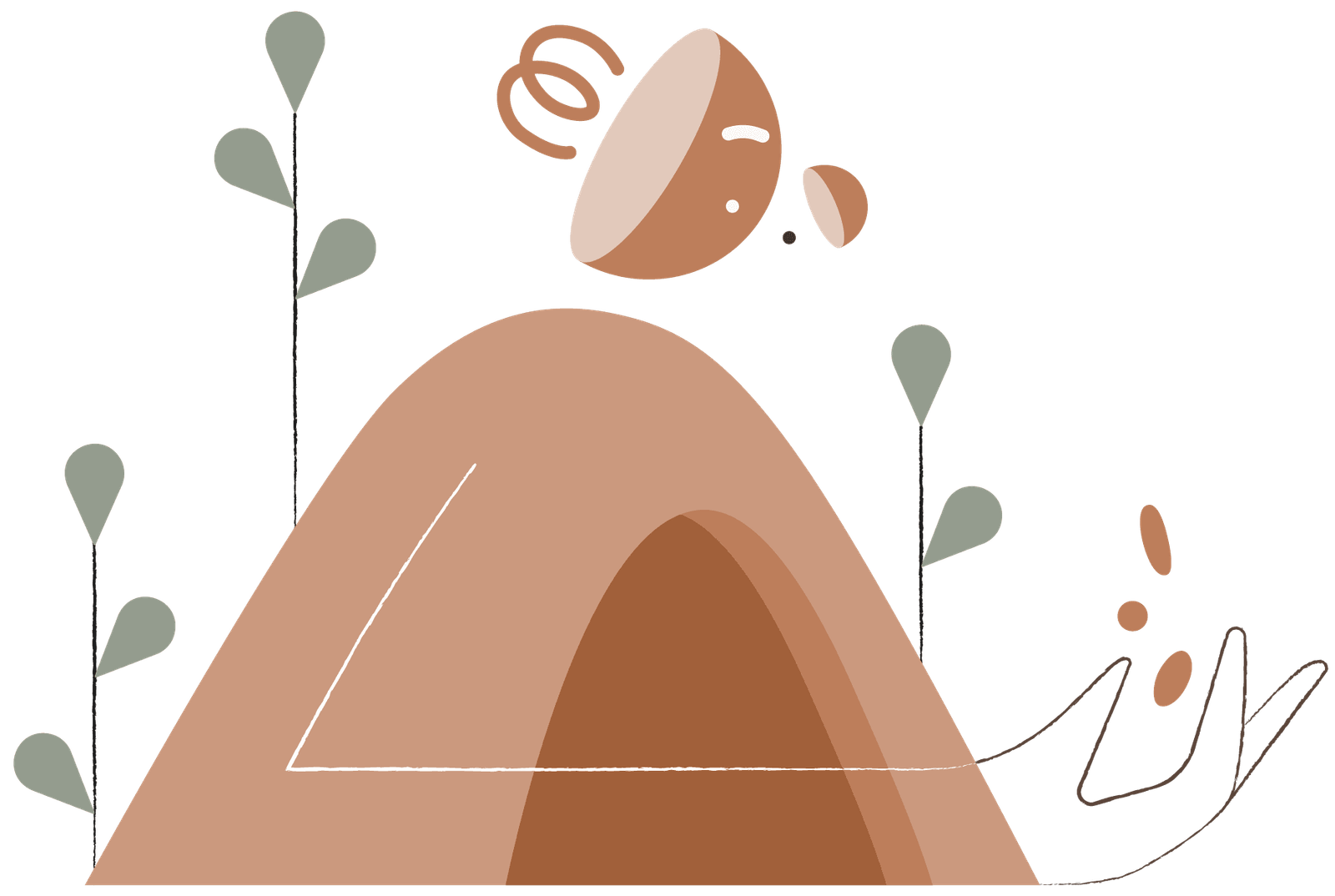
At a glance
Twos are generous and warm, with a genuine drive to make the people around them feel loved and comfortable. They notice what someone needs, sometimes before that person does, and they're quick to offer it: their time, their attention, a meal when someone's had a hard week.
It's often hard for Twos to hold on to their own boundaries or ask directly for what they need. Many Twos get used to pretending they don't need anything, until the unspoken cost of that catches up with them: quiet resentment toward the very people they've been taking care of.
**
Twos are affectionate people who put a lot of energy into the people they love. For a Two, most of life is relational: they read a room through other people's needs and desires, with a kind of fine-tuned attention most people don't have to other people's states.
It's not hard for a Two to be well-liked. Making people feel cared for and accepted comes naturally to them. What's harder to see from the outside is how much a Two is often giving beyond what's sustainable, while insisting they're fine. Twos take real pride in showing up for others, but they have a much harder time letting someone show up for them.
Twos want to be needed. Other people needing them is part of how they know they matter.
Twos belong to the Enneagram's heart group, along with Threes and Fours , the three types with a close relationship to shame and self-worth. Threes fear they aren't worthy of love unless they perform. Fours are searching for a sense of being authentically themselves. Twos try to earn love and acceptance by giving themselves to others.
As children, many Twos absorb the message that asking for what they need directly isn't okay. So they learn to get their needs met indirectly, through what they do for other people. They're often the child who's eager to help a parent, who volunteers for the extra project at school. With sharp social instincts, they tend to make friends easily, but they also learn early to set aside their own wants to stay close to the people they care about.
Twos often carry an unspoken belief that having needs of their own is selfish. So they meet their own needs sideways, through a pattern of giving in order to get. Underneath that pattern is a real fear: that if people stop needing them, they'll be left. Their sense of self-worth ends up resting on how others respond to their generosity.
That helpful, warm nature can turn sharp when a Two is worn out from showing up for everyone else. In those moments, a quieter pride, the sense of just how essential they are to the people around them, comes to the surface, and it can show up as pressure or subtle manipulation to get their own needs met.
When a Two is doing well, they find self-worth that doesn't depend on what they do for others. They get comfortable caring for themselves and asking other people to do the same. They build real warmth and safety around them, from a place of strength instead of self-erasure.
The most useful thing a Two can hear: they're worth loving simply for being themselves. Needing things is human. Naming those needs out loud won't cost them the relationships they've worked so hard to hold together.
Twos bring real warmth to a team: they notice when a colleague is struggling, remember details that matter to people, and make the people around them feel genuinely supported. Teams with a Two on them often run on better morale than teams without one.
The friction point is usually workload and boundaries. A Two can end up doing work that was never theirs to do, because saying no feels like letting someone down. They can also struggle to deliver blunt, critical feedback, softening it so much that the message doesn't land. Twos tend to do well in roles built around people: customer success, teaching, healthcare, HR, community and nonprofit work. They can struggle in highly competitive, adversarial, or metrics-first environments where being liked isn't part of the job.
What helps a Two thrive at work: a defined scope, so their workload doesn't quietly expand to fill whatever's asked of them, and direct permission to say no without it costing them the relationship.
Under stress, Twos can take on some of the less healthy traits of Type 8: more forceful, more controlling, quicker to demand rather than ask.
In growth, Twos move toward the healthier traits of Type 4: more in touch with their own feelings and needs, more willing to be honest about what they actually want instead of reading everyone else's needs first.
Every type can lean toward one of its two neighbors. For Twos, that's Type 1 or Type 3.
more disciplined and principled. This wing adds structure and a stronger internal standard for their own conduct, along with higher expectations of the people they're caring for.
more outgoing and image-conscious. This wing makes it easier for a Two to be visible and to say directly what they want. How they're seen starts to matter to them almost as much as what they're doing for others.
Wings
Explore Type 2 wings
Personality isn't fixed. People move between healthier and less healthy expressions of their type depending on the season of life, the stress they're under, and how much self-awareness they're bringing to it. Here's how that range shows up for Twos. These are patterns, not a diagnosis.
Unhealthy Twos** become more manipulative in the pursuit of feeling needed, doing things nobody asked for in hopes of a response. Some fall into playing the martyr, sacrificing themselves loudly while insisting no one appreciates it. Relationships can turn codependent, with a Two working to keep someone reliant on them even when it isn't good for either person. The fear of seeming selfish ends up producing exactly that.
Average Twos** put most of their energy into the people around them: family, friends, colleagues. The appreciation they get back is part of what keeps them going. When they're worn down, they tell themselves it's better to keep giving than to seem selfish, and a quiet frustration can build from feeling taken for granted, even though they've rarely said out loud what they actually need.
healthy expressions of their type depending on the season of life, the stress they're under, and how much self-awareness they're bringing to it. Here's how that range shows up for Twos. These are patterns, not a diagnosis.
Healthy Twos find their sense of worth apart from what they do for others. They ask for what they want instead of managing everyone else's needs first, and they hold real boundaries without guilt. Mother Teresa and Desmond Tutu are often cited as examples of Twos operating at this level: people whose care for others came from genuine strength rather than a need to be needed.
It's common not to be sure of your type right away. The Enneagram looks at the motivation behind a behavior, not just the behavior, so different types can look similar from the outside.
Type 2s are most often confused with Type 6s and Type 8s. Some also mistype as a Type 7 or Type 9. Since every type has two possible wings, it's also worth checking whether your "wing" might actually be your core type.
Read the full guide to Type 2 mistypes
Mistypes
Type 2 lookalikes
Type 2 patterns show up in love, friendship, and work. The compatibility guide covers how this type pairs with all nine types, including another Type 2.
Relationships
Type 2 with each type
Stevie Wonder
Mother Teresa
Desmond Tutu
Eleanor Roosevelt
Luciano Pavarotti
Nancy Reagan
Albert Schweitzer
Elizabeth Taylor
Be direct. You're good at sensing what someone needs before they say it. Most people don't have that same instinct in reverse. Tell people clearly what you need instead of hinting and hoping they'll notice.
Learn to say no. Not everything someone asks of you is actually yours to do. It feels good to see the relief on their face, but not at the cost of your own exhaustion. Defending your own limits is a job only you can do.
Watch for flattery. It's fine if not everyone likes you. Notice when you're working hard to seem likeable, or using flattery to earn someone's approval. Plenty of people will like you as you are.
Check in with yourself. Ask at least once a day: what do I actually need right now, and is anyone meeting that, including me? You're skilled at compassion. Turn some of it toward yourself.
Notice your own pride. Helping people matters on its own. It loses something when it's mostly there to remind you how essential you are to someone else. Watch for using someone's gratitude to quiet a deeper fear of being unlovable.
Be direct.
You're good at sensing what someone needs before they say it. Most people don't have that same instinct in reverse. Tell people clearly what you need instead of hinting and hoping they'll notice.
Learn to say no.
Not everything someone asks of you is actually yours to do. It feels good to see the relief on their face, but not at the cost of your own exhaustion. Defending your own limits is a job only you can do.
Watch for flattery.
It's fine if not everyone likes you. Notice when you're working hard to seem likeable, or using flattery to earn someone's approval. Plenty of people will like you as you are.
Check in with yourself.
Ask at least once a day: what do I actually need right now, and is anyone meeting that, including me? You're skilled at compassion. Turn some of it toward yourself.
Notice your own pride.
Helping people matters on its own. It loses something when it's mostly there to remind you how essential you are to someone else. Watch for using someone's gratitude to quiet a deeper fear of being unlovable.
Nine types
Type 1
Ones are idealistic and conscientious, with a strong sense of right and wrong and a real commitment to doing things well. They act with discipline and can put off a short-term reward for a better outcome later. Ones are
Type 2 · here
Twos are generous and warm, with a genuine drive to make the people around them feel loved and comfortable. They notice what someone needs, sometimes before that person does, and they're quick to offer it: their time, th
Type 3
Threes are driven, adaptable, and hardworking. They believe in their own ability to grow their talents and get things done, and they're quick to read a room and become whoever that room needs them to be to win its approv
Type 4
Fours are introspective and expressive, with an unusually direct line to their own emotions. They're comfortable in parts of human experience most people avoid: grief, longing, the strange, the dark. They care about mean
Type 5
Fives want to understand the world before they engage with it. They observe, analyze, and take things apart to see how they work, and they'd rather know everything there is to know about a situation before they act on it
Type 6
Sixes are reliable, loyal, and careful. They notice what could go wrong before anyone else does, and they put real effort into being ready for it. People count on a Six to follow through, to ask the question no one else
Type 7
Sevens are energetic and quick to see the possibilities in a situation. For a Seven, the world is mostly a place worth exploring, and they live with an eye on what's next. They're often the person in the room who can fin
Type 8
Eights move through the world with a lot of energy and a low tolerance for being told what to do. They notice power dynamics quickly, in a room or a relationship, and they'd rather be the one setting the terms than the o
Type 9
Nines are easygoing, grounded, and unselfish. They want peace, in their own inner state and in the environment around them, which is why they're often the ones a group turns to for mediating. Nines are genuinely good at
Think Type 2 might be you?
Take the free test and see how The Helper shows up for you.
